


Read on Patreon
Support this Work
(Patrons and supporters- this is an updated essay on R&J that I decided to put out. I added some stuff, changed a few things and fixed a mistake or two. I've been learning a bit about medieval alchemy for instance. Perhaps of interest. As always thank you so much for your support and encouragement. Progress is being made on MND! Another Shorty on the way. Mind blowing stuff omg. Stay strong stay healthy, RF)
A friend sent me an article called “Romeo and Juliet In A Nutshell” by Joseph Pearce for Crisis Magazine, a publication associated with the Catholic Church, and he asked my opinion. Mr. Pearce got a few things right- that Romeo & Juliet is a play about lust, not romance or love, and it's about the inevitable punishment of that lust.

I was pleased that Mr. Pearce and I agreed on a simple observation which most of us miss, since Shakespeare was expert at hiding multiple alternate and deeper meanings in his plays. But in my nutshell of R & J, there is an obscured, complicated and sinister scenario employing alchemical, pagan, and Gnostic symbolism, including vampire imagery (!) all of it part of the typically dense Shakespearean symbolic backdrop to what in this play leads to the ancient practice of ritual human sacrifice. In ancient Greece this ritual was called Pharmakos, rumored to be with us still, in one form or another, hiding at the extreme edge of the modern dark occult, or hiding in plain sight. Perhaps this play is even an aspect of that modern dark occult.
In Romeo and Juliet, Friar, a Roman Catholic priest, seemingly makes the terrible mistake of marrying the 13 yr old Juliet to Romeo, a boy of indeterminate age but about 17 or 18. Following Friar’s action many deaths ensue, though most viewers and critics like Pearce, give him a pass. Did Friar just make a good intentioned mistake? Or did things turn out as he planned? The play ends with Juliet Capulet made into a statue of of pure gold, as promised by old man Montague, as a gift to the of Verona. With the pure gold as a clue, I make the case for Friar as a social alchemist, Romeo and Juliet as his materials, and the city of Verona as his laboratory, and his magickal ‘working’ a success.
This is a short companion article to my 3-hour podcast episode that goes through R&J scene by scene. This essay delivers the gist of what’s hiding in the play, but without most of the many incriminating details in the text, some of which are quite shocking. For that you’ll have to listen to the podcast. This essay is the shortcut, with enough examples to hopefully prove my case.
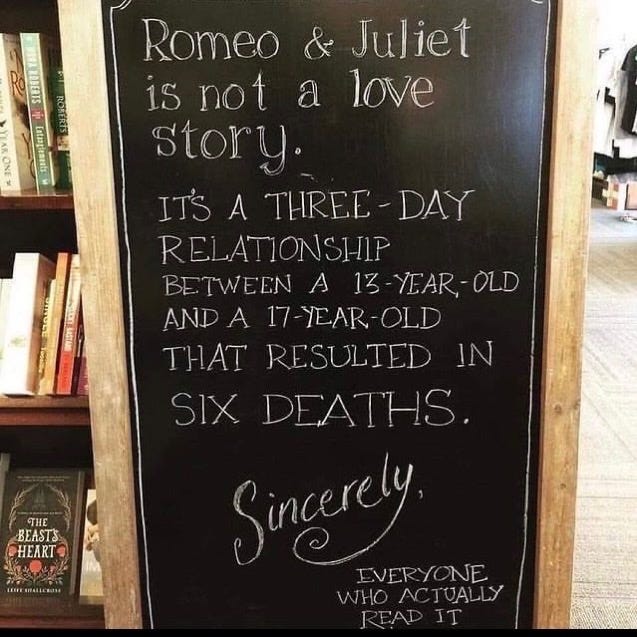
The play is profound but it’s not about romance or love. Romance and doomed love are a masterful misdirection, even a ruse. It’s clearly a play about lust as Pearce states, but more so about punishment as a collective cleansing- via an ancient ritual designed to bring peace to a community. The ritual was practiced openly centuries ago, but must stay hidden in the modern, Catholic Verona of the play. Remarkably it was also meant to stay hidden from the audience watching the play!

Friar has help: he is in league with Nurse, Juliet’s longtime caregiver. They work together with Romeo as bait, luring in the virgin, ultimately to bury her alive as an ancient vestal virgin would have been. Shakespeare, triples the dark fun with three youngsters lying in a pool of blood in the the grand finalé. Romeo and Juliet is a horror story. The evidence? It’s right there in the text of the play. Let’s have a look.
The symbolism is dense, layered and multifaceted throughout, typical for Shakespeare, and much of it is pagan or Gnostic, occult and alchemical, with little romance or love evident. The dialogue needs to be read, as it flies by on stage or screen, and some of it is often cut in modern productions. Raunchy sexual slang and imagery linked to violence or death permeates the entire play non-stop. How romantic is that? The play for instance begins with two young members of the Capulet clan gleefully discussing rape, followed by a violent interaction with the Montague clan.
The sun is referred to as a god eight times in the play, the first time in the first act, where the sun is called the “worshipped sun”. The sun is referenced 19 times overall, the moon 5 times, Diana goddess of the moon twice. The insistent motif of light and dark has been mentioned by many critics. Romeo and Juliet, by word and deed choose the night and darkness. This does not bode well.

Even Friar, the pretend Catholic priest, refers to the sun as god, which is a sure giveaway to the pagan alchemical Gnostic jumble that makes up the veiled subtext of the play. When we first meet Friar he calls the sun a “burning eye” which is a clear nod to the mystery religion of Mithraism, a religion that called the sun “Mithra’s eye”. Mithraism was a secret cult-religion practiced by small groups of men in caves or caverns throughout the Roman Empire, including London, then called Londinium. Mithra the sun god is associated with human sacrifice according to Walter Burkert, a leading scholar of the mystery cults. [Burkert, Ancient Mystery Cults] In Freemasonry, highly influenced by Mithraism, the sun is a primary symbol, if not the primary symbol for every Masonic initiate. The famous Masonic “Eye of Providence” is itself a symbol of the sun. It’s on the back of the dollar bill ya’ll.
Masonic Sun
Naturally Mr. Pearce and I part company regarding the character of Friar, the Catholic Priest.
Pearce states in his essay:
“However, he [Friar] is told by the Prince at the end of the play that “we still have known thee for a holy man”, a judgment which has been borne out, for the most part, by his actions.”
FOR THE MOST PART? HOLY ACTIONS? [Prince says this to Friar as Juliet, Romeo and Paris lie in pools of blood nearby] Mr. Pearce, what “holy actions” of Friar? And what about those parts not so holy? Friar, closely watched, has been only pretend holy, a snake in the grass, spider in the cupboard, satanist in the church.
The Friar’s actions are suspect, from his calling the sun “worshipped” at his introduction, to the bloody ending, and to the unusually close relationship he has with young Romeo throughout, who calls Friar his “ghostly father” Hmmmm. (The Arden Shakespeare says that “ghostly” means “spiritual”. OK.) At the very end of the play Friar shows up carrying a lamp, a shovel and a crowbar at the crypt where Juliet lies paralyzed from the potion he gave her. There is something clearly not right with this guy, but few pick up on it, either the characters in the play or the members of the audience watching. Friar is caught by the Watchman attempting to run away from the the three bloody corpses lying in the crypt, all three of whom Friar had recently been in close contact. The Prince, boss man of Verona, shows up to summarily let Friar go. The ‘Prince’ character, by the way, is widely considered by critics to be a reference to Machiavelli and to a Machiavellian political philosophy. Surely this is so.
Also at the end the play, old man Montague, formerly Juliet Capulet's sworn enemy, promises to raise the dead Juliet to be reborn as a stature of pure gold, as mentioned. Gold is the ultimate alchemical symbol of the sun, it is the coniunctio oppositorum, a Latin phrase referring to the alchemical goal of ‘union of opposites’, in this case the union of the Montagues and Capulets. Alchemical symbolism runs deep throughout the play as it does throughout much of Shakespeare. This is interesting because “the father of modern Science”, Francis Bacon, has been rumored for 400 years to be the true author of the Shakespeare plays, and Science came directly from Alchemy. Chemistry even takes it’s name from al-chemy, and early scientists were grave robbers. The original alchemists were required to perform sacrifice in order for their experiments to succeed.

A golden Juliet in Verona today, under the famous balcony
Friar’s alchemical working is a type of social engineering that requires a rule breaker, a threat to the social order who is to be punished for the good of the community. It’s the Old Religion. It’s a Shakespeare play, so parallel symbolism is layered on top of layers. Juliet is also a Vestal Virgin, one of the sacred Roman virgins who were tasked with tending to an eternal flame for the health of ancient Rome. The Roman punishment for a Vestal Virgin should she violated her vow of chastity was to be buried alive, which is exactly what happens to Juliet.
Romeo tells Juliet to “cast off her vestal livery”. Livery is an Elizabethan term meaning “distinctive dress worn by the members of a particular group”.
“Vestal livery” are ‘Vestments - liturgical garments’. Romeo would have her cast off her Vestal garment of chastity in this famous bit of dialogue (Act 2 Scene 2)
“But, soft! what light through yonder window breaks?
It is the east, and Juliet is the sun.
Arise, fair sun, and kill the envious moon,
Who is already sick and pale with grief,
That thou her maid art far more fair than she:
Be not her maid, since she is envious;
Her vestal livery is but sick and green
And none but fools do wear it; cast it off.”
Got alchemy? Juliet will soon do just as she is told and cast off her clothes, her vestal livery. Earlier in the play she had expressed a desire for chastity, a symbolic vow of purity that can be interpreted as her pledged as a maid to the moon goddess Diana and as well as Virgin for the flame of the pure light of the Eternal City, as well as a dutiful daughter to loving parents.
Mr. Pearce states: “It is clear, therefore, that Juliet is betrayed by those who should have saved her from her own immature folly.” This is the crux of the play, but Friar, the Catholic priest, not only doesn’t save her he orchestrates the betrayal, even encouraging her folly for his own ends. So it’s curious why Pearce would see Friar as mostly holy, and in this common reading of the play lies the fantastical subterfuge masterfully exhibited by Francis ShakesBacon, a man who mastered the arts of “dissimulation” as he terms it, in his famous book Essays. Friar has deftly maneuvered the situation with the help of Juliet’s Nurse. Romeo’s first love Rosaline would have served equally well. Rosaline stayed pure, refusing Romeo’s constant entreaties for sex. Romeo even offers to pay Rosalin for sex. (Yep) I assume that Friar had a spy in the house of Rosaline as he did in the house of Capulet. Rosaline must be a reference to Bacon’s pure-hearted transhumanist Rosicrucians, and as such the name ‘Rosaline’ might serve as a signal to the initiates Bacon stated for whom he wrote. (here.)
Unlike the pharmakos of old, in which all the citizens of a city willingly participated, in modern, Christian Verona the sacrificial process must be hidden, the citizens not realizing the part they play in the ritual. The remarkable thing is that the process must remain hidden from the audience as well, in the Elizabethan era and even now. This is accomplished using specific dramatic techniques, some of which are discussed below, which are necessary for the play alchemy to be effective on the play audience.
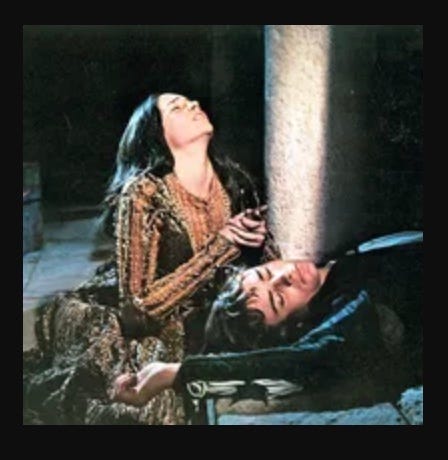
Juliet calls herself a ‘sheath’ to Romeo’s ‘dagger’, using crude sexual slang as she kills herself
There is more layering of the symbolism of horror with a substantial amount of vampire imagery in the play. I know, sounds crazy! Listen to this: the first thing we learn about Romeo is that he stays out all night and comes home only as the sun is rising. He is said to “augmenting the fresh morning dew with his tears”. Dew was a magickal substance uswed by medieval alchemists. Is he gathering dew for Friar? This happens three times in a play where the action spans only four days and nights, with a dead body count of six. Romeo has become a creature of the night, to his mother and father’s despair, and he soon turns Juliet into a creature of the night as well, with only two brief kisses at the dance. Juliet will be forever changed. She almost instantly becomes enslaved to lust, to base materiality, which a sin in the Gnostic religion Friar practices. In yet another layering of symbolism, we can see the outlines of the story of Sophia, the Gnostic creator goddess, who, in one of the many Gnostic creation myths, after greatly debasing herself in the materiality of her own creation, is redeemed in the pure light of the next world. Juliet resembles the Gnostic goddess Sophia, creator of our false world. The great Shakespearean scholar Professor Paul Cantor even delineates some of the Gnosticism in R&J.

Romeo is described by Nurse as by far the most handsome lad in all the land, quite a useful attribute to lure in a young virgin. Why are Romeo and Nurse so close to Friar? It’s very odd and unexplained. Friar appears to have turned Romeo into a dew gathering night creature. Romeo, and then Juliet, proclaim eloquent hymns to the night that grow increasingly elaborate.
Here’s one example: Act 3 scene 2, with Juliet in her orchard the day after meeting Romeo. She is begging for night to come, for sex and for death. Got romance? She’s 13. At this moment Romeo is killing Tybalt.
Come, night; come, Romeo; come, thou day in night;
For thou wilt lie upon the wings of night
Whiter than new snow on a raven's back.
Come, gentle night, come, loving, black-brow'd night,
Give me my Romeo; and, when he shall die,
Take him and cut him out in little stars,
And he will make the face of heaven so fine
That all the world will be in love with night
And pay no worship to the garish sun.
Here Romeo literally becomes the night, even a sort of pagan god, as ‘little stars’ to make all the world be in love with night. Juliet and Romeo are consumed by darkness, materiality and lust. Friar must marry them in order to insure that Juliet will consummate her newly lustful state, making their soon to arrive one night of sex palatable to the Elizabethan audience, and to Juliet herself, who of course is still a good girl, if you will.
As for Juliet's sudden and determined lust, she was instantly changed by Romeo’s two kisses. Got vampiric? Then just a day after the first kiss, Juliet is a howling, lustful creature. A bit odd for a 13 yr. old girl. Well, she is married now, raging for Romeo to come to her bed in the “love performing night”. Romeo, the magician alchemist’s junior vampire assistant, transformed 13 yr. old chaste Juliet with one kiss and declarations of his love. OK, two kisses.
Vampire imagery in Act 3 Scene 5, after their one night together, hours less thana day after Tybalt’s murder:
JULIET
O God, I have an ill-divining soul!
Methinks I see thee, now thou art below,
As one dead in the bottom of a tomb:
Either my eyesight fails, or thou look'st pale.
ROMEO
And trust me, love, in my eye so do you:
Dry sorrow drinks our blood. Adieu, adieu!
Dry sorrow drinks our blood! That’s romantic. Vampire tales existed in the time period of the writing of the play, in various forms. They are even a part of the Grail and Troubadour legends (linked to Gnosticism) like the Morte d’Arthur, Grail legends forming yet another layer of symbolism to back-drop the action of the play. Lancelot too, was punished for violating his vow of purity.
Juliet, consummating her sudden lust, can be punished, even though married, for she has violated her many symbolic vows of chastity: as a Vestal, as the misguided Gnostic Sophia, as a votress of chaste Diana, and by defying father and mother Capulet by marrying Romeo instead of Paris. She is a threat to the social order, she is just all wrong! Friar performed the hidden marriage rite, hoping, he said, that it would bring peace to Verona! Turning from the sun and the light, Juliet, like Lancelot, must die.
Nurse appears by her earlier speeches to have been grooming Juliet, even at one point encouraging Juliet to go to bed with Romeo, which she then actually enables, smuggling out a ladder to facilitate Romeo’s access to Juliet’s bedroom. That’s just plain weird but it fits the Nurse, shown earlier by hints to be sinister and in cahoots with Friar. She is always over at his place for some unexplained reason. In classic Shakespearean antithesis Nurse at one point however, urges Juliet to forget about Romeo and to marry Paris- and for the audience this is another ‘adult betrayal’ of the young Juliet, and is what the audience remembers most about Nurse. How could Nurse say such a thing? We all know Juliet loves Romeo! It’s a brutal moment, part of the long, slow and hard-to-watch torture of Juliet, which is just what the ancient pharmakos received before they died. Juliet is fully alone now, except for Friar and Romeo. This is one of the techniques I mentioned that the dark Bard uses to hide his deeper intent. Nurse, who was Juliet’s ‘wet-nurse’, breast fed Juliet as an infant, began to betray Juliet long ago, evidenced by her strange early monologues that foreshadow evil, but she comes off as batty and silly, operating by stealth. Nurse is practicing Baconian dissimulation. Bacon, the statesman, lawyer, poet and philosopher has a famous essay, wherein he advocates Big Lies: From OF SIMULATION AND DISSIMULATION by Francis Bacon:
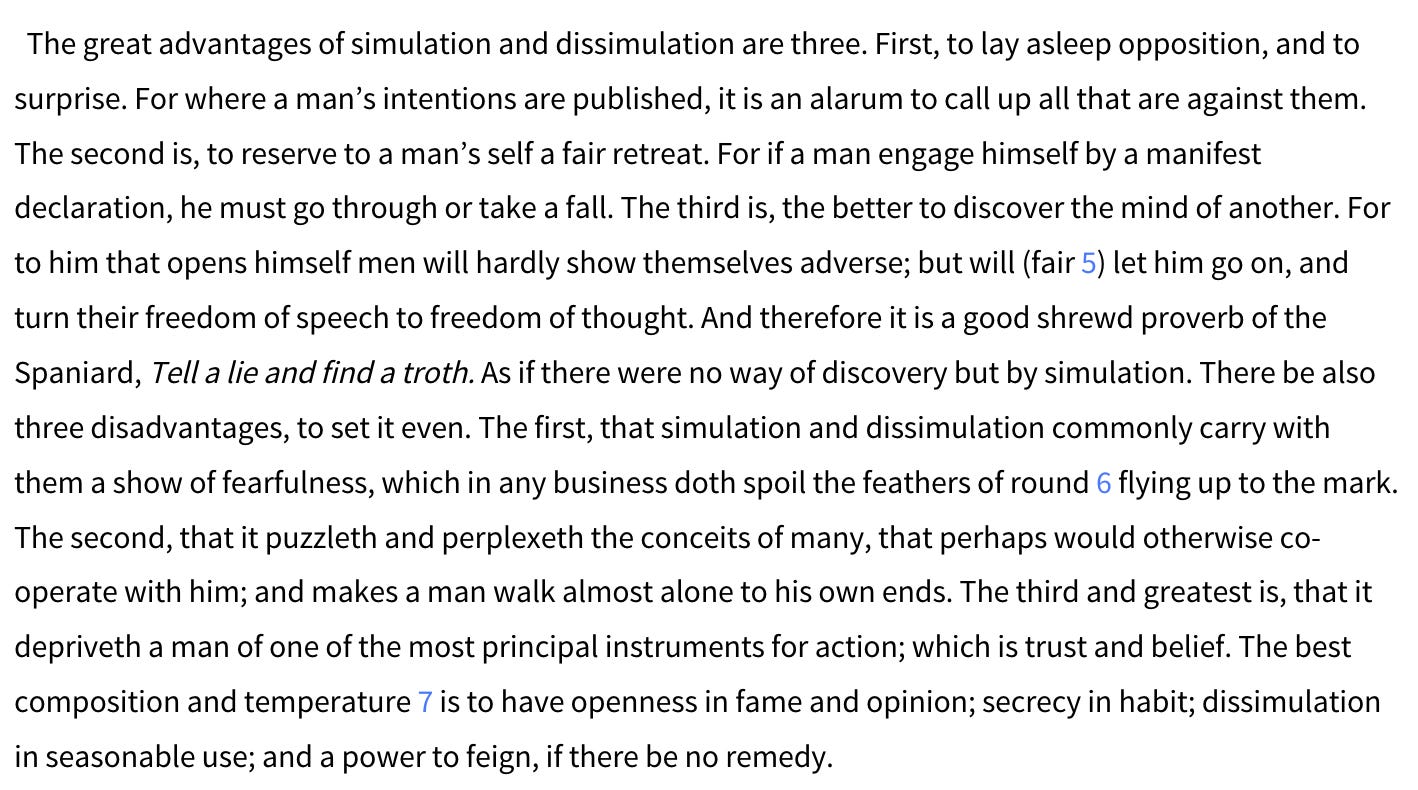
“But if a Man cannot obtaine to that Judgment, then it is left to him, generally to be Close and a Dissembler.” ~ Francis Bacon

The Friar is then caught fleeing the crypt after he went to (supposedly) check on Juliet, whom he had buried alive with his herbal alchemy. Friar figures she would be soon awakening but the time doesn’t quite square, he’s actually a day early. What was he really up to, this herbal alchemist? At any rate he is carrying, as it says in the stage directions, a shovel, a crowbar and a lantern. This shows him as a potential grave robber, as were many early scientists, and fits with his ability to concoct super powerful potions as an alchemist/magician/vampiric. Is Frair connected to the creation of revenants? He flees the crypt after meeting with the just having awoken Juliet, because he hears someone coming. This was the final and ultimate betrayal of Juliet, and by a Catholic priest. Juliet then kills herself, using sexual slang. We can safely put away any notions of some that Shakespeare secretly advocated Catholicism! Friar is put under “great suspicion” by the Watchman because he was carrying the crypt-opening and grave digging tools, but is then inexplicably and immediately pardoned on the spot by the Prince. The Friar I believe to be a self-portrait of Baron Verulam, Sir Francis Bacon himself. Baron Verulam puts himself in many of his plays. In Macbeth he plays the Wyrde Sisters. In The Tempest he is Prospero the magician. In A Midsummer Night’s Dream he is Oberon. In As You Like It he plays Jaques who delivers the immortal Gnostic soliloquy of all the world’s a stage, the very motto of the Globe Theater
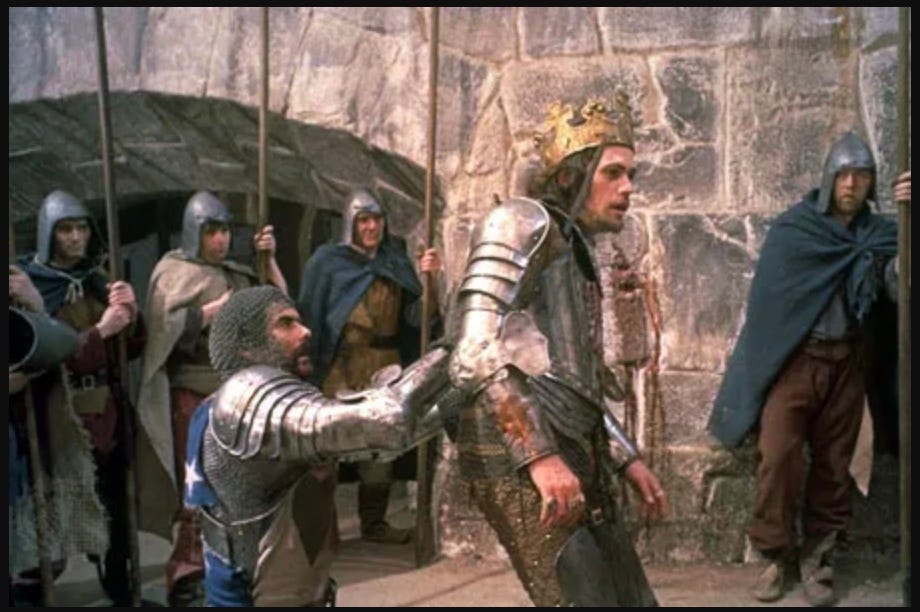
Machiavellian Prince then says “we still have known thee for a holy man”. That was fast. The blood has not yet dried and Friar is already off the hook. Prince was in on the whole thing, as the unrest in Verona threatened his rule. The populace of Verona were sick and tired of the Montague/Capulet violence and the Prince needed to do something about it. Thus, pharmakos. The terrible tragedy overwhelms the rancor and violence pervading the city. Peace returns to a stunned and remorseful Verona.
Old man Montague promises old man Capulet and to the assembled crowd in the cemetery a statue of Juliet in pure gold, thus completing the ‘union of opposites’. Montague explicitly calls Juliet (and Romeo) a sacrifice in nearly the very last words of the play:
MONTAGUE
But I can give thee more:
For I will raise her statue in pure gold;
That while Verona by that name is known,
There shall no figure at such rate be set
As that of true and faithful Juliet.
CAPULET
As rich shall Romeo's by his lady's lie;
Poor sacrifices of our enmity!
The Prince mentions the sun one last time before the curtain drops.
PRINCE
A glooming peace this morning with it brings;
The sun, for sorrow, will not show his head:
Go hence, to have more talk of these sad things;
Some shall be pardon'd, and some punished:
For never was a story of more woe
Than this of Juliet and her Romeo.
The author of Romeo and Juliet enjoys mocking his audience. Our natural human sympathy for romance and love makes it impossible for us to see what is happening. The Bard, master of simulation and dissimulation, throws the veil over the secrets in this manner, using our sympathy while mocking our sympathy, by obscuring the true source of Juliet’s pain. He also mocks our sympathy by getting us to cheer for the sudden lust of a 13 yr. old girl and her predatory Romeo. Romeo’s friend Mercutio even tells Romeo to “f**k her up the ass” (in slightly less obvious slang) as Romeo climbs over the orchard wall for the famous balcony scene. Herein the Bard mocks romantic love itself. It’s a Gnostic inversion. Few seem to notice and kudos to those that do. It only took about 400 years to peel off the fake label adorning this play. The Bard mastered manipulating of our emotions to use as a veil. It’s Machiavelli again, this time for the stage, hidden from our perception. The Weird Sisters of Macbeth similarly stay hidden after brutalizing the mind of poor Macbeth with their ‘strange intelligence’. Macbeth himself will soon become another grand engineered pharmakos. The audience is brought to the scene of each sacrifice, which each time is graphically portrayed for us on stage. R&J’s pharmakos is inverted, as we sympathize with the victim, leaving us pacified and bewildered. In Macbeth, however, in keeping with tradition we cheer, relieved at the death of the scapegoat and the hoisting of his head over the crowd, leaving us brutalized and pacified. The evil embodied by the Weird Sisters (who have beards, beards that never make it to the stage or screen) is not confronted by the characters in the play, staying hidden after orchestrating the events. Everyone who knew of the existence of the Weird Sisters is dead, as covert murder proves another effective method for staying hidden.
There’s a lot more buried in the details of R&J which is why the deep analysis takes 3 hours. The play is bursting at the seams with artful disguises, and I’m sure not all of them have been found.
There are similar hidden themes in other ‘Shakespeare’ plays. Themes veiled by rich imagery, strange words both brand new and archaic, manipulating our minds and emotions in a flow of the powerful iambic rhythms of the heart. Check out this close reading of the Tempest by Colin Still, from 1923. That discovery only of his oly took 300 years to uncover. Or have a look at “Why The Shakespeare Hoax Is So Important”. Any Freemason would approve of turning a light onto the dark Bard, since Freemasons are ‘enlightened’ and call themselves the Sons of Light. Hey, nice name!
As for Romeo and Juliet, everyone thinks and feels the play to be about romance and doomed love. INCREDIBLE!